
The “Hurry Up and Wait” (HUAW) syndrome is the maritime equivalent of speeding to a red light. It’s an efficiency killer that costs the industry billions in fuel and carbon penalties every year. It is the systemic pattern of vessels burning excess fuel to reach port as fast as possible, only to sit at anchor for days because the terminal isn’t ready.
It’s not a glitch. It’s not bad luck. It’s a deeply embedded behavioral pattern that costs the industry billions annually in wasted fuel, carbon penalties, and operational chaos. In 2026, HUAW Syndrome is becoming one of the most expensive habits in global logistics.
Diagnosing HUAW Syndrome
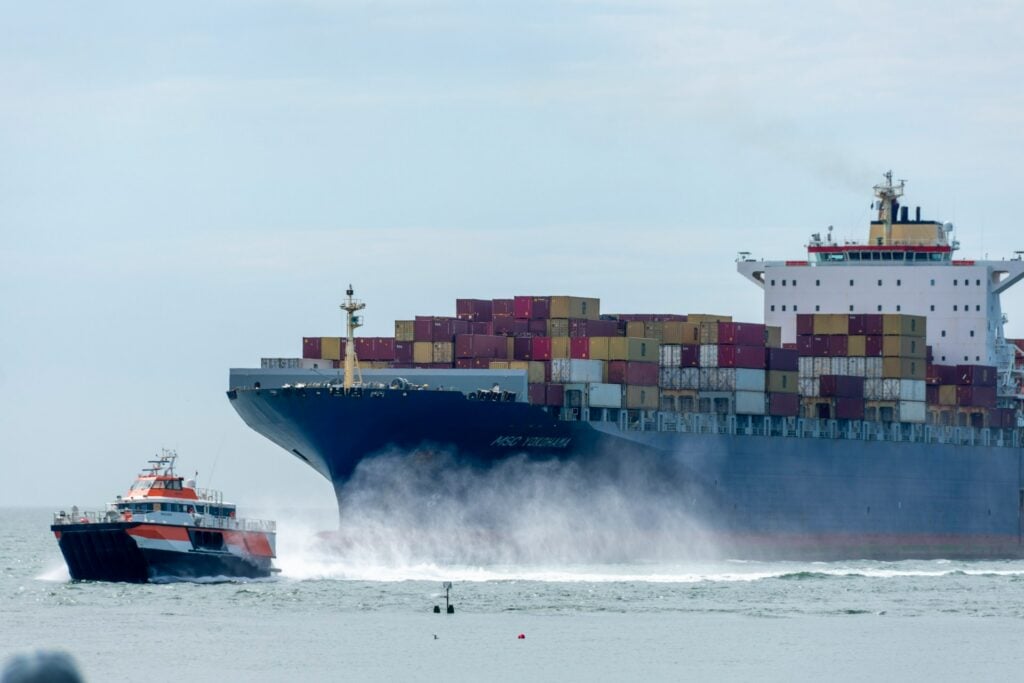
HUAW Syndrome occurs when a vessel maintains high transit speeds to arrive at a pilot station as early as possible, despite having no confirmed berth availability. The ship then anchors, sometimes for hours, sometimes for weeks, waiting for a slot to materialize.
The syndrome presents three distinct symptoms:
Symptom 1: The Speed Spike. Vessels increase speed in the final legs of a voyage, burning disproportionate fuel to shave hours off arrival time. Ship propulsion follows a cubic relationship with speed, doubling speed increases fuel consumption roughly eightfold. The fuel burned in those final “sprint” hours often exceeds what the entire preceding voyage consumed per mile.
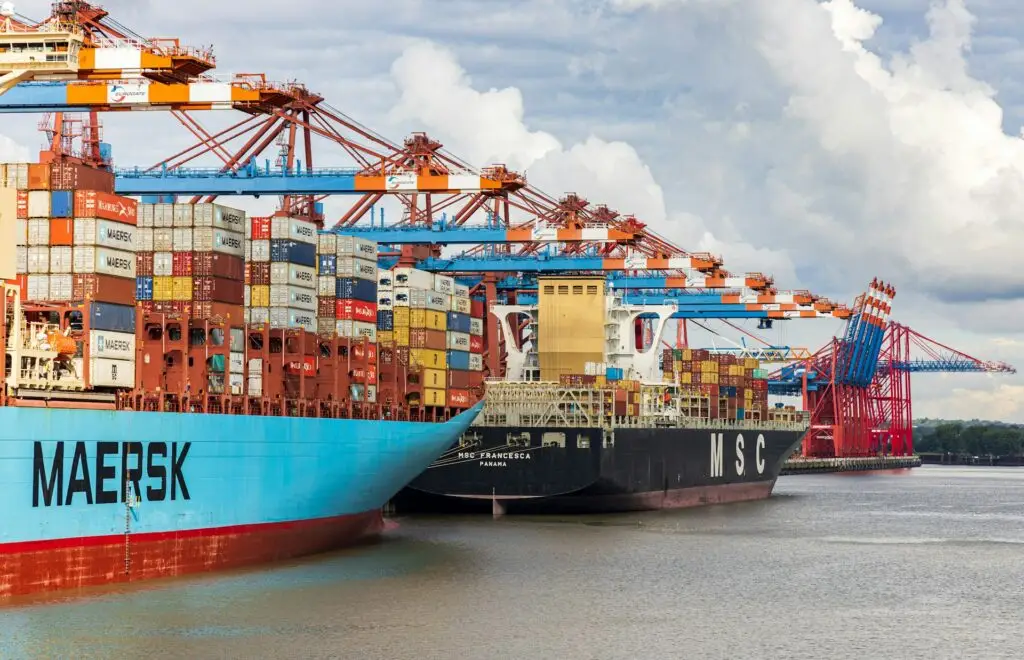
Symptom 2: The Anchor Queue. Ships arrive and wait. And wait. Anchorages outside major ports become floating parking lots, with vessels burning fuel for generators, running systems, and maintaining crew operations while producing zero forward progress.
Symptom 3: The Visibility Blackout. Once at anchor, containers enter a communications dead zone. ETAs become meaningless. Downstream logistics (trucking, warehousing, customer delivery) collapse into guesswork. The cargo owner experiences a “black hole” where their goods simply… exist somewhere offshore.
The Underlying Pathology: First-Come, First-Served
HUAW Syndrome isn’t irrational at the individual level. It’s a logical response to a deeply flawed system. Most ports still operate berthing queues on a first-come, first-served basis. Traditional maritime contracts and port protocols create what amounts to a drag race: if your vessel slows down to save fuel, it risks losing its queue position to a competitor who didn’t.
For carriers operating on thin margins, that’s an unacceptable gamble. So everyone races. And, eventually, everyone waits.
The result is a collective action problem where each vessel’s “rational” choice produces an irrational system-wide outcome. HUAW Syndrome is, at its core, a coordination failure dressed up as standard operating procedure.
The Three-Pronged Tax of HUAW Syndrome
HUAW Syndrome isn’t free. It imposes a triple penalty that compounds across financial, regulatory, and operational dimensions.
Tax #1: The Fuel Penalty
The physics are unforgiving. A vessel rushing at 20 knots instead of cruising at 14 knots burns dramatically more fuel per nautical mile. When that speed delivers you to an anchorage rather than a berth, you’ve converted bunker fuel directly into waste.
Conservative estimates suggest that HUAW Syndrome adds 10-15% to voyage fuel costs on affected routes. For a large container vessel, that can translate to hundreds of thousands of dollars per voyage, money burned into the ocean for the privilege of waiting.
Tax #2: The Carbon Penalty
In 2026, HUAW Syndrome carries regulatory consequences that didn’t exist two years ago.
The EU Emissions Trading System now covers 100% of emissions for intra-EU voyages and 50% for voyages entering or leaving EU ports. Every ton of CO₂ from unnecessary speeding now carries a direct financial liability. FuelEU Maritime adds another layer, imposing greenhouse gas intensity targets that penalize exactly the kind of inefficiency HUAW Syndrome creates.
The cost of “speeding to wait” has effectively tripled in the last 24 months. What was once absorbed as an operational nuisance is now a compliance risk with board-level visibility.
Tax #3: The Operational Friction
Anchor time isn’t downtime. For crews, HUAW Syndrome means sustained alertness, monitoring weather, managing anchor watch, handling the psychological strain of indefinite waiting. Fatigue accumulates. Morale suffers.
For cargo owners, it’s worse. Containers at anchor are containers in limbo. Arrival predictions become fiction. Downstream partners (truckers, warehouses, end customers) can’t plan against information that doesn’t exist. The ripple effects cascade through supply chains, multiplying the cost of each hour at anchor.
HUAW Syndrome
The Hidden Cost of Speeding to Wait
The 2026 Reality: Why HUAW Syndrome Has Become Unsustainable
For decades, the industry absorbed HUAW Syndrome as a cost of doing business. Fuel was cheap. Carbon was free. Schedule buffers hid the waste. That world no longer exists.
As of January 2026, maritime emissions face real financial consequences. EU ETS carbon prices fluctuate but remain substantial. FuelEU Maritime’s intensity targets tighten annually. Vessels that indulge in HUAW behavior directly undermine their ability to meet compliance thresholds.
The carriers who continue operating with HUAW Syndrome embedded in their schedules will find themselves purchasing compliance credits from competitors who’ve learned to optimize. That’s a direct transfer of competitive advantage.
The Physics vs. Psychology Gap
What makes HUAW Syndrome so persistent is that we’ve solved the physics of efficient shipping. Modern vessels have optimized hulls, efficient engines, and sophisticated weather routing. The engineering is just excellent!
What we haven’t solved is the psychology of the supply chain.
HUAW Syndrome persists because of trust deficits and data silos. Terminals don’t share real-time operational status. Carriers won’t reveal positions to competitors. Port authorities lack digital infrastructure for dynamic arrival coordination.
Everyone optimizes locally. The network suffers globally. HUAW Syndrome is a symptom of a system that can’t coordinate.
The Rotterdam Paradox
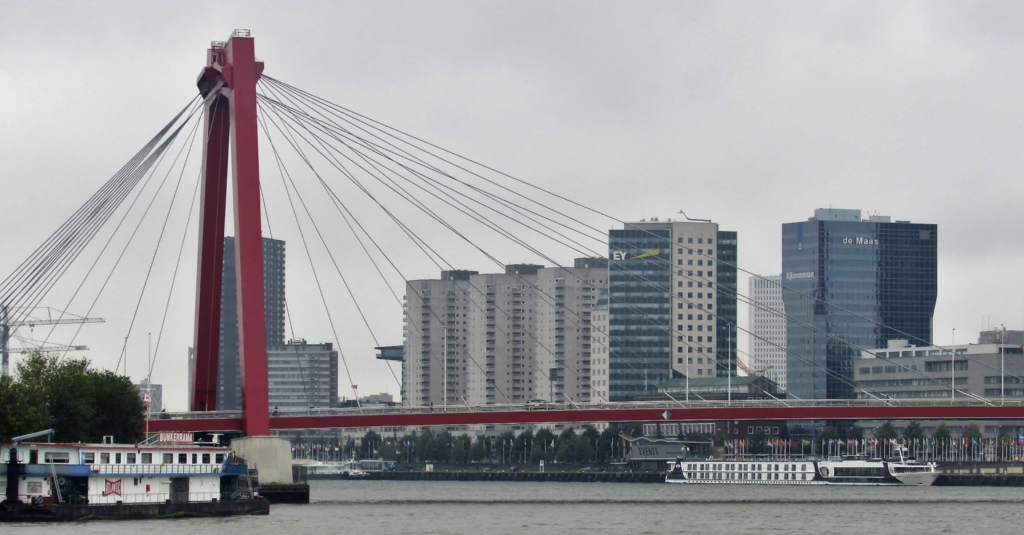
The Port of Rotterdam, Europe’s largest and among the world’s most advanced, offers a stark illustration of HUAW Syndrome in action. In 2024-2025, Rotterdam’s port calls declined by approximately 10.3% due to shifting trade patterns and Red Sea diversions.
Fewer ships should mean shorter waits. The opposite occurred. Wait times for feeder vessels increased by nearly 30%!
This paradox reveals HUAW Syndrome’s root cause: the problem isn’t capacity. It’s synchronization.
Rotterdam has invested heavily in AI scheduling and port community systems. These tools have delivered improvements. But they’ve also hit a wall, not from bad algorithms, but from bad data sharing.
Terminals in competitive environments resist exposing operational details to centralized systems. Real-time berth availability, crane schedules, labor allocation, this information stays siloed. The AI makes predictions based on incomplete pictures, essentially blind to the human decisions driving actual schedules.
The technology can only optimize what it can see. And HUAW Syndrome thrives in darkness.
Global Evidence: HUAW Syndrome Worldwide
Rotterdam isn’t unique. HUAW Syndrome manifests across every major shipping region.
Singapore: The Bunching Effect
In early 2025, Singapore experienced what observers called the “bunching effect.” Global disruptions caused vessels to arrive in waves rather than steady streams. Queue times stretched to 9 days for some categories.
Ships that had sprinted across the Indian Ocean sat at anchor, running generators and air conditioning while crews watched the skyline from miles offshore. They’d “saved time” on the voyage only to lose it (and more) waiting for slots.
Classic HUAW Syndrome: maximum speed, maximum wait, maximum waste.
Hay Point: The Queue of Shame
Australia’s Hay Point coal terminal represents HUAW Syndrome in its most extreme form. At peak periods, 70+ bulk carriers anchor offshore, some waiting weeks to load.
The terminal indeed has adequate infrastructure. The problem is a rigid, non-digital scheduling system that can’t adapt to inherent shipping variability. Weather delays, mine disruptions, and arrival uncertainty cascade into extended queues.
Each waiting vessel accumulates costs: charter hire continues, crews remain deployed, cargo owners watch commodity prices move while their product sits offshore. HUAW Syndrome, compounding daily.
The Cure: Virtual Arrival and Just-in-Time Coordination
HUAW Syndrome is treatable. The therapy has been understood for years. Implementation has been the challenge.
Virtual Arrival: The Protocol
Virtual Arrival is a contractual and operational framework that breaks the HUAW pattern. Instead of racing to anchor, the terminal and vessel agree on a reduced transit speed in exchange for a guaranteed berthing slot.
The mechanics:
- The terminal provides accurate, real-time berth availability
- The vessel calculates optimal speed to arrive just-in-time
- Both parties share the fuel savings and emissions reductions
- Charterers and cargo owners benefit from reduced carbon liability and improved predictability
Studies suggest widespread Virtual Arrival adoption could reduce voyage emissions by 5-15%, with some routes seeing greater improvements. More importantly, it attacks HUAW Syndrome at its root: replacing the race-to-anchor incentive with a coordination-based alternative.
The Trust Requirement
Virtual Arrival can’t function without data sharing. And data sharing requires trust.
For a vessel to confidently slow down, it needs assurance the promised slot will materialize. Terminals must share operational information they’ve historically guarded. Carriers must reveal voyage plans to parties outside immediate commercial relationships. Ports must build digital infrastructure enabling real-time coordination.
This is where treating HUAW Syndrome becomes a collective challenge. Individual actors can’t cure it alone. The system must evolve together.
From Syndrome to Solution: The Visibility Imperative
HUAW Syndrome persists because the maritime industry has a trust problem masquerading as a logistics problem.
Ships race because they can’t see the queue. Terminals overbook because they can’t predict arrivals. Cargo owners absorb costs because they can’t prove the inefficiency. Everyone protects their data because sharing feels like competitive exposure.
But here’s the paradox: the information hoarding that feels individually protective is collectively destructive. The fuel wasted, the carbon emitted, the crews exhausted at anchor… these costs are distributed across the entire system, paid by everyone while benefiting virtually no one.
Virtual Arrival and Just-in-Time protocols aren’t technically complicated. The math is straightforward. What’s hard is convincing competitors to coordinate, terminals to expose their operations, and carriers to reveal their positions.
The industry has spent decades optimizing vessels. The next decade will test whether it can optimize relationships. HUAW Syndrome won’t be cured by better ships or smarter algorithms. It will be cured when the cost of distrust finally exceeds the discomfort of transparency..!