Empowering data quality with GraphTP
Dockflow checks what carriers, terminals and AIS report for each container and resolves the conflicts between them with GraphTP, so your team works from one status per container, always up to date.
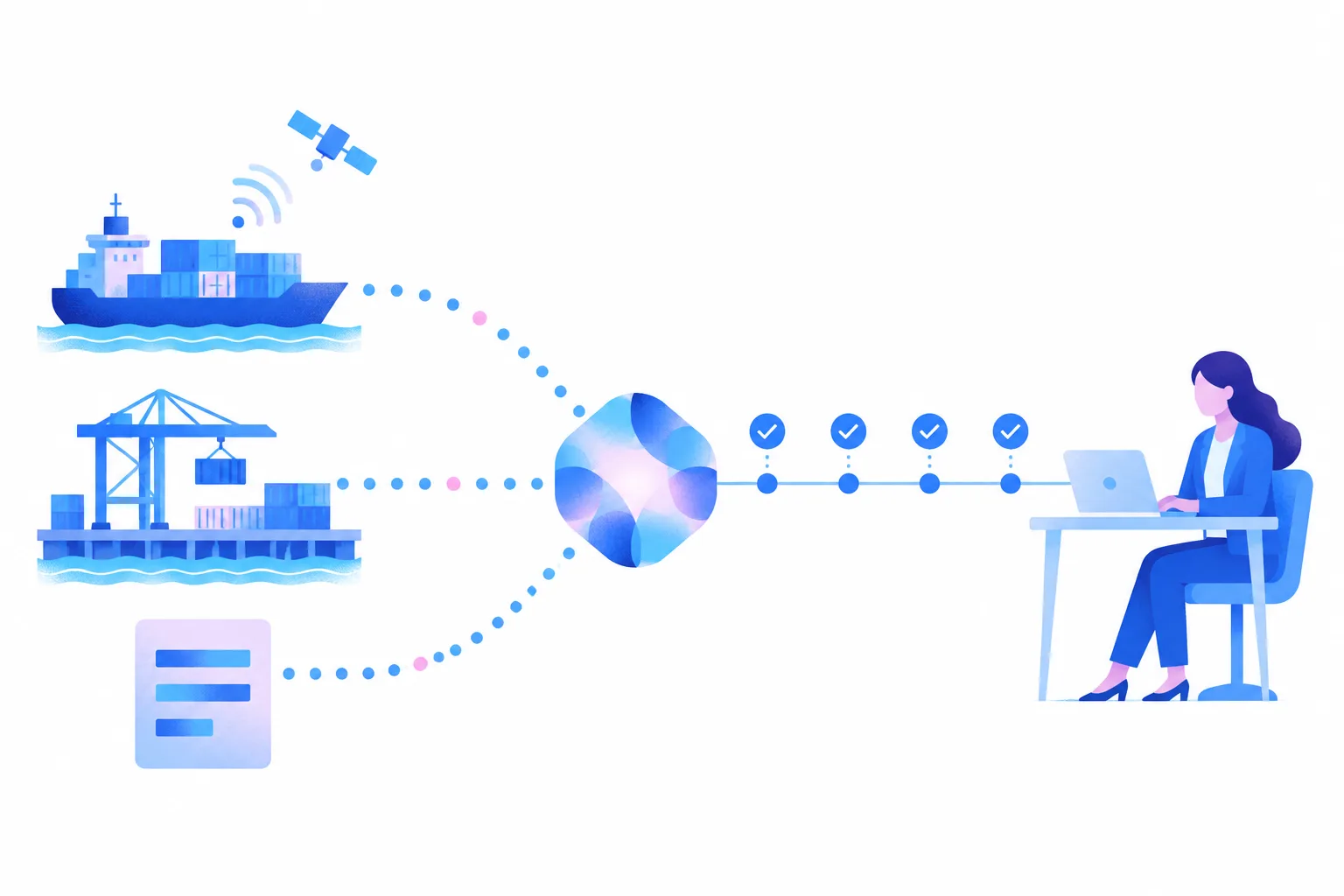
Conflicting data, resolved by GraphTP
The same container event can reach Dockflow from a carrier, a terminal and AIS, not always with the same time. GraphTP, Dockflow’s data-conflict-resolution algorithm, compares what each source reports and resolves the conflicts. It also scores every tradeflow for data anomalies and flags milestones that contradict each other, such as events out of order or a carrier and terminal that disagree. By detecting inconsistencies across logistics systems, Dockflow lets teams focus on decision-making instead of checking each source by hand.
Unifying insights from comprehensive data sources
Dockflow consolidates data from multiple sources, including AIS, terminals, IoT sensors, and freight management systems, into one unified platform. This integration eliminates data silos and provides a complete view of your logistics operations, always up to date, enabling collaboration and better decision-making across your supply chain.
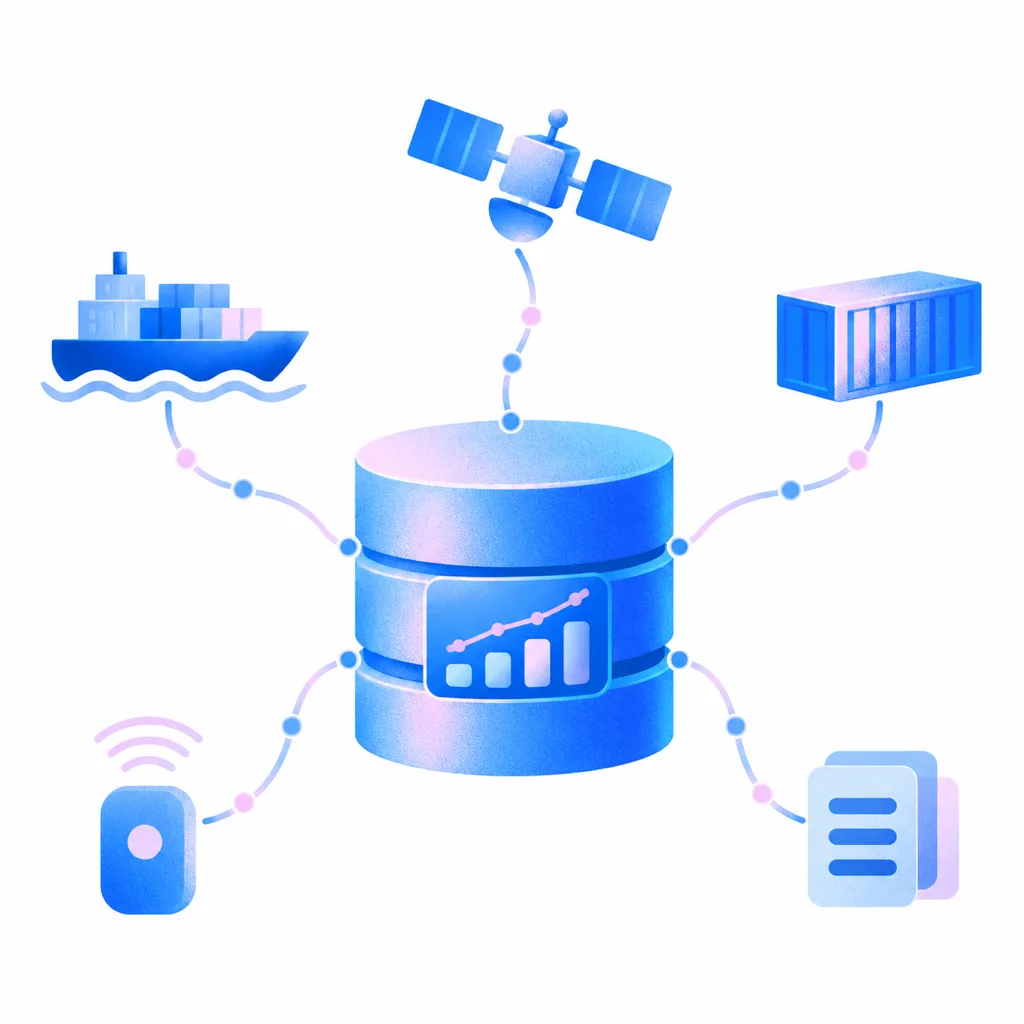
Milestones confirmed by AIS and terminal data
AIS vessel positions confirm vessel departures and arrivals, and terminal data corrects carrier data that is out of date. Each milestone shows where its confirmation came from. With accurate data at your fingertips, you can make informed, confident decisions to optimize operations and improve efficiency.
Achieve precision with reliable, high-fidelity data
Eliminate uncertainty with accurate data insights
Dockflow’s high-fidelity data provides a clear and precise picture of your logistics operations, reducing guesswork. With accurate insights at every stage, you can confidently address challenges and optimize decision-making processes.
Foster consistency across your supply chain
Reliable data ensures smooth and consistent operations throughout your supply chain. It reduces variability, enhances collaboration between partners, and enables efficiency and alignment across all logistics activities.
Frequently asked questions about data quality
How do we import data into the platform?
Dockflow offers several import methods, depending on your scale. For one-off shipments, you enter the data directly in the platform. For bulk imports, Dockflow provides an Excel template: add an internal reference plus a container number, booking reference or bill of lading, and Dockflow fills in the rest. For full automation, the Dockflow API connects your own systems directly. The steps are in the Dockflow knowledge base.
Can we export the data to Excel?
Yes. Dockflow supports full data export in Excel format. The shipment details, event histories and container insights available in the platform can be downloaded to Excel for further analysis, your own reporting or offline recordkeeping. That keeps the data accessible for operational teams and for external stakeholders who don’t work in Dockflow.
How does Dockflow maintain data integrity across complex global logistics operations?
Dockflow cross-references each container’s events across sources before they reach your team. For a vessel arrival, for example, carrier data, terminal data and AIS vessel positions are compared: AIS vessel positions confirm vessel departures and arrivals, and terminal data corrects carrier data that is out of date. GraphTP, Dockflow’s data-conflict-resolution algorithm, resolves the conflicts that remain.
Which data sources are integrated into Dockflow’s platform?
Dockflow tracks containers across 120+ ocean carriers, including long-tail lines. Carrier data is combined with AIS vessel positions, terminal data and Portbase; in Antwerp, release status comes from NxtPort Certified Pickup and T-Mining. TrakAssure and LoRaWAN IoT sensors add reefer temperature. Your own shipment data comes in through the Excel import or the Dockflow API, so everything sits in one platform.
Can Dockflow identify and filter out inaccurate or duplicate data?
Yes. When two sources report the same milestone with different times, GraphTP, Dockflow’s data-conflict-resolution algorithm, compares them and resolves the conflict. GraphTP also scores every tradeflow for data anomalies and flags milestones that contradict each other, such as events out of order or a carrier and terminal that disagree. Your team sees one status per milestone on the container’s timeline, instead of two conflicting updates to check by hand. More on container visibility.
How does Dockflow ensure accuracy and completeness of logistics data?
Each milestone on a container’s timeline shows where its confirmation came from, such as port data or the carrier. Accuracy comes from checking sources against each other: AIS vessel positions confirm vessel departures and arrivals, and terminal data corrects carrier data that is out of date. Every milestone is time-stamped and kept in the container’s history, so you can look back at what happened and when.
Why is data quality important for supply chain decision-making?
Data quality directly affects timing, coordination, cost and customer satisfaction. Poor data leads to missed handoffs, inaccurate ETAs, surprise delays and more email and manual follow-up. With Dockflow, decisions such as planning a pick-up, scheduling a warehouse slot or informing a consignee rest on data that is always up to date, with free-time monitoring and alerts before charges hit.
How reliable is Dockflow’s data for emissions tracking?
RealCalc calculates CO2 on the GLEC framework, using the actual routes sailed. The same AIS vessel positions that confirm departures and arrivals give RealCalc the track the vessel actually sailed, so the emissions figure follows each shipment’s real route instead of a planned one. More on CO2 emissions.
How does Dockflow help reduce the risk of delays caused by bad data?
Bad data often leads to delayed handovers, missed appointment slots and uninformed stakeholders. Dockflow checks sources against each other before an event reaches your workflows. If a carrier has not yet reported a vessel departure, AIS vessel positions can confirm it, so your plans follow what actually happened. No-code automations flag exceptions, so your team can act before a delay spreads.
How does Dockflow keep every partner on the same data?
Dockflow acts as a shared source of truth for the parties on a shipment: forwarders, consignees, customs brokers and warehouses. Through the white-label customer portal, under the forwarder’s brand, clients see the same milestones your team sees. Upload documents such as bills of lading to a shipment and share them with the partners on it, so nobody works from an older update.

Work from container data you can trust