Monitoring you can trust
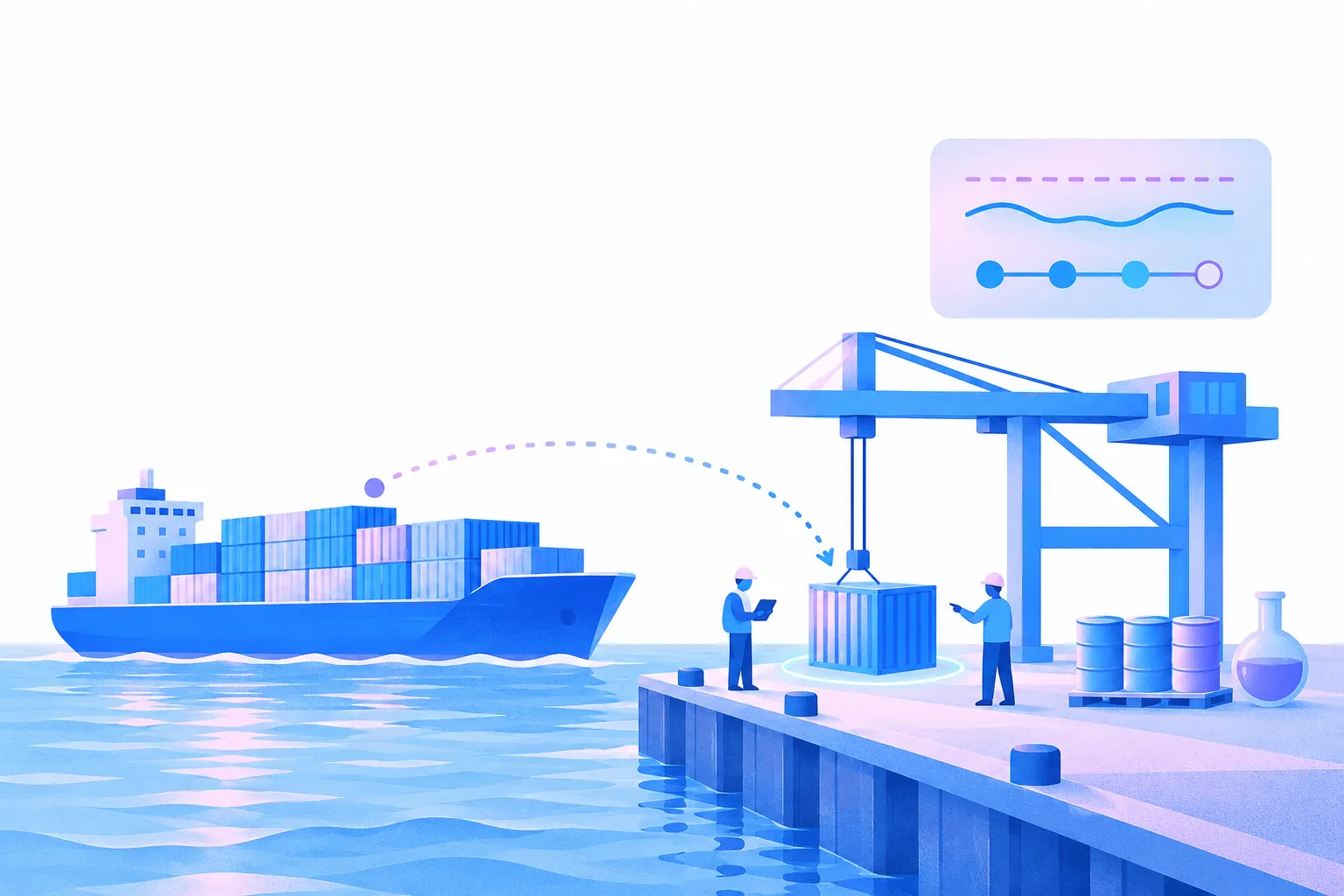
Gain complete visibility over your chemical supply chain with Dockflow’s logistics tracking, always up to date across 120+ ocean carriers, including long-tail lines.
Dockflow keeps each chemical container’s status always up to date and alerts your team to delays and milestones, so you can act before a disruption escalates. For temperature-sensitive cargo, IoT sensors add the temperature, with an alert when a reading crosses your threshold.
“Before Dockflow, we needed 2 full-time employees to continuously monitor our shipments in transit. Now, we are automatically alerted of all important events and temperature issues.”
 Gaurav Sethi, CEO, Intercont Freight Liners
Gain complete visibility over your chemical supply chain with Dockflow’s logistics tracking, always up to date across 120+ ocean carriers, including long-tail lines.
Our automation and IoT tools monitor your temperature-sensitive chemical shipments: TrakAssure and LoRaWAN IoT sensors report the temperature, and you get an alert when a reading crosses your threshold.
Dockflow simplifies complex chemical logistics workflows, so you manage hazardous and non-hazardous shipments in one platform.
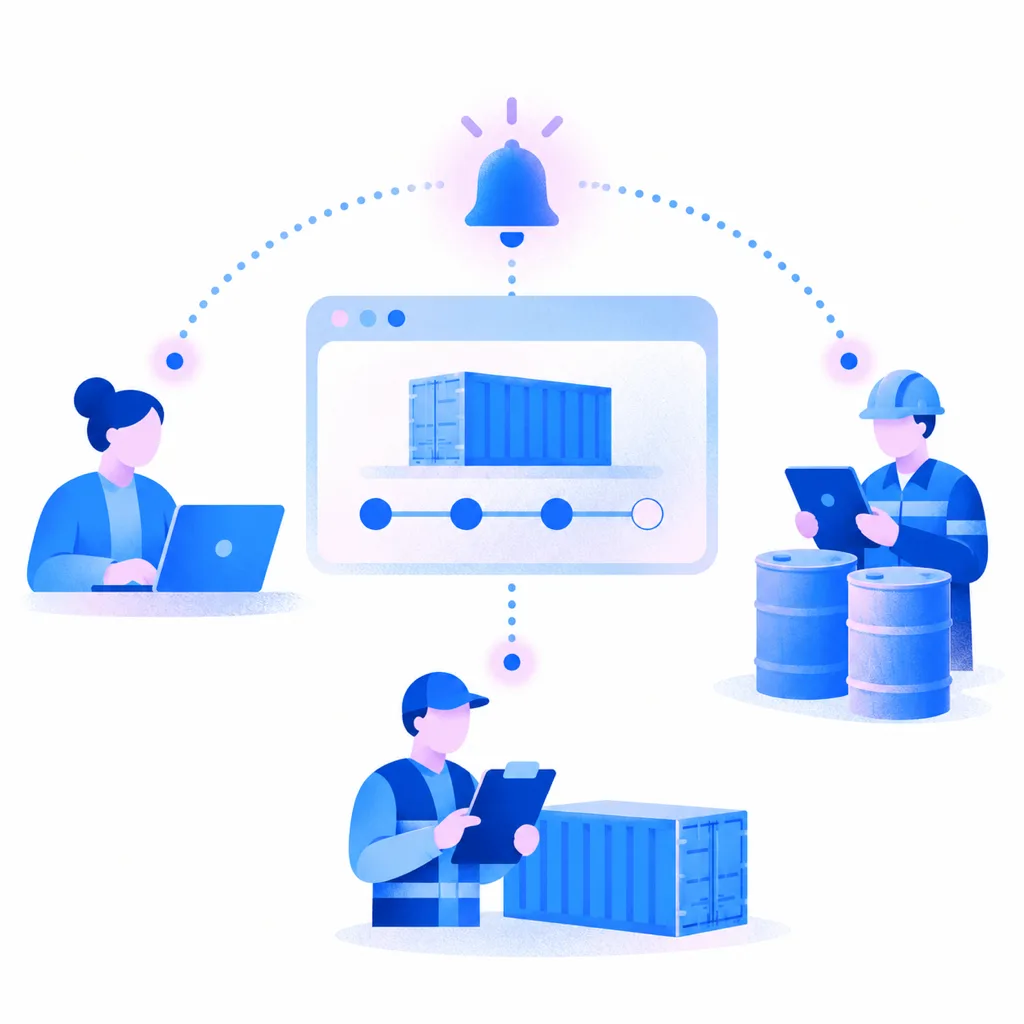
Receive notifications on critical events like delays or milestones to ensure smooth chemical logistics operations.
Coordinate with partners, carriers, and tank container providers to ensure visibility and timely updates for your chemical shipments.
Dockflow shows when a container has been returned empty, based on the shipping line’s empty-return milestone.
Identify and resolve potential delays or disruptions before they escalate, keeping your chemical supply chain running smoothly.
For chemicals that require precise temperature control, TrakAssure and LoRaWAN IoT sensors report the temperature into Dockflow, always up to date, with an alert when a reading crosses your threshold.
Free-time monitoring with alerts before charges hit: every container shows how much free time is left, so your team can plan pick-up before it runs out instead of finding out from the invoice.
Temperature
Available datasources: 1
Add Sensor Device
1 Sep 04:00
3 Sep 23:00
6 Sep 18:00
9 Sep 13:00
12 Sep 08:00
15 Sep 03:00
17 Sep 22:00
90
80
70
60
50
40
30
20
45
40
35
30
25
20
15
10
5
31.4 °C
Dockflow supports chemical logistics with tracking that is always up to date, customized notifications and automated monitoring. Our platform offers full visibility for sensitive chemical shipments across 120+ ocean carriers, including long-tail lines, reducing risks and optimizing workflows for more efficient supply chain management.
Carrier data is combined with AIS vessel positions, terminal data and Portbase, and alerts can also follow key milestones, such as container discharge or transit delays.
Dockflow gives you visibility into each chemical container, always up to date: its location and milestones from carrier data and, for temperature-sensitive cargo, the temperature from TrakAssure and LoRaWAN IoT sensors. Tailored alerts notify you of potential risks, such as delays or threshold breaches, so your team can act swiftly. The Trident API feeds the same data into your existing systems. Details are in the API documentation.
Tracking that is always up to date shows where each hazardous chemical container is and which milestones it has passed, such as vessel discharge or arrival. For sensitive cargo, IoT sensors add the temperature. Where the shipping line shares reefer data or a tracker is fitted, humidity shows next to temperature. Tailored alerts flag delays and temperature threshold breaches, so logistics teams can act quickly.
Dockflow adds AI predictions for arrival, berthing and unloading to the containers you track. That helps warehouses prepare for the arrival of sensitive chemicals or hazardous materials: they can plan storage, trucks and staff around the moment the cargo becomes available. Tailored alerts flag delays early, so your team can take proactive measures instead of reacting when the container is already at the terminal.
Dockflow offers container tracking that is always up to date across 120+ ocean carriers, including long-tail lines; temperature monitoring through TrakAssure and LoRaWAN IoT sensors; custom alerts when a reading crosses a threshold; AI predictions for arrival, berthing and unloading; and no-code automations that adapt workflows to your operational needs. Together they give your team one view of every hazardous shipment.
Dockflow offers tailored alerts for chemical logistics: temperature threshold breaches from IoT sensors, container status updates for key milestones such as discharge or delays, and free-time monitoring with alerts before charges hit. Custom event alerts are fully customizable with no-code automations, based on your specific operational needs. These alerts help your team keep control and act early. More on demurrage tracking.
Dockflow brings tracking that is always up to date, AI predictions for arrival, berthing and unloading, and temperature data from IoT sensors into one platform. Tailored alerts help manage disruptions and reduce inefficiencies, while the Trident API feeds container status into your TMS or FMS. With better visibility and control, your team acts on the exceptions instead of checking every shipment by hand.
Dockflow connects to the systems you already use through the Trident API. It sits beside your TMS or FMS, and the API, including free-time calculation, feeds container status and milestones into your own platform, so tank container planning can work from the same data. Endpoints and set-up are described in the API documentation.
Dockflow creates a centralized platform for shared shipment data that is always up to date. Both manufacturers and logistics providers stay updated on shipment statuses and container conditions. Tailored alerts ensure clear communication and faster decision-making, which reduces delays and prevents miscommunication. Forwarders can share the same view with their clients through a white-label customer portal, under their own brand.
Yes. RealCalc calculates CO2 on the GLEC framework, using the actual routes sailed, so the figure for each container follows the voyage it really made. You find it in Dockflow next to the tracking data of the same container, so your team can follow the emissions of its chemical shipments without a separate calculation per voyage. More on CO2 emissions.

Book a demo & our team will be in touch shortly.